New at VIS 2026, VISions brings forward-thinking ideas to the broad visualization community, creating space for researchers and practitioners to consider where interactive visualization and visual analysis should go next.
Rather than reporting on existing results, VISions talks propose new directions for the field. They may explore emerging trends, foundational technologies, compelling community challenges, overlooked topics, or alternative perspectives on visualization. Selected for their novelty, relevance, and potential to provoke productive discussion, these talks are intended to challenge assumptions and inspire future research and practice.
We are delighted to announce our inaugural VISions speakers.
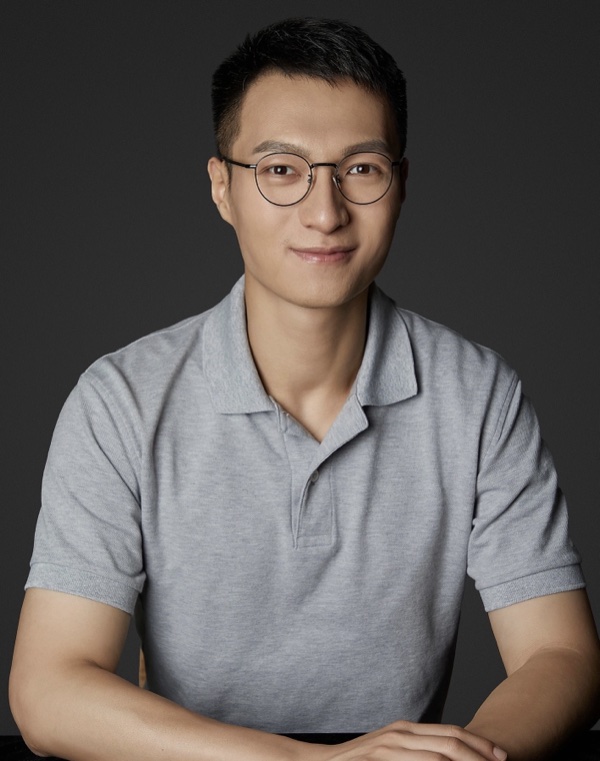
Zhu-Tian Chen: Will Visualization Help Humans Act on Data or Help AI Act on Humans?
Abstract
AI is collapsing the data-to-action pipeline that visualization has historically supported. As increasingly capable systems perform analysis, produce insights, generate representations, and recommend or execute decisions, people will rationally delegate intermediate steps and conserve their scarce attention. Rather than resist this collapse by forcing people to inspect processes they have chosen to delegate, I argue that VIS should concede the pipeline’s interior and protect its terminal boundary with human perception. When the same AI controls both a conclusion and its representation, visualization can change sides: from an instrument humans use to act on data into one AI uses to act on humans. I therefore propose visualization as a cognitive skin: an independent, subtractive representation layer that AI may supply input to but cannot control. Drawing from security, psychology, formal methods, and small neuro-symbolic models, this layer would mediate continuously while demanding attention only under consequential conditions. This agenda repositions VIS to preserve efficient delegation without surrendering the final step through which AI conclusions become human beliefs and actions.
Bio
Zhu-Tian Chen is an Assistant Professor in the Department of Computer Science and Engineering at the University of Minnesota Twin Cities. His research aims to augment human intelligence in physical environments. He builds situated AI systems as a “System 3” for human cognition: an external cognitive layer, mediated through interactive visual interfaces, that complements System 1 (fast, intuitive thinking) and System 2 (slow, deliberative reasoning). His work has been recognized with multiple paper awards and an NSF CAREER Award.
For more information, visit his website at https://chenzhutian.org/.
Ana Crisan: Ways of Thinking, Ways of Doing, and the Future of Visualization Research

Abstract
Visualization research is inherently interdisciplinary, yet much of the field advances knowledge through two complementary modes of inquiry: design engineering, which explores what visualization systems could become through the creation of artifacts, and scientific empiricism, which seeks to understand how those systems work through observation and evidence. Increasingly, AI is transforming both. As models become capable of generating visualization designs, proposing experiments, and analyzing evidence, they force us to confront a fundamental question: what are the actual intellectual contributions of visualization research? I argue that when AI makes it easier to build artifacts and produce evidence, our field becomes less about creating things and measuring things, and more about shaping the spaces of possibility and knowledge that define our future. This shift elevates the importance of openness, reproducibility, and human agency, challenging us to rethink not only how we conduct visualization research, but why we do it.
Bio
Anamaria (Ana) Crisan is an Assistant Professor in the Cheriton School of Computer Science at the University of Waterloo, where she leads the Insight Lab. She is affiliated with the WaterlooHCI Lab and a member of the Waterloo Data and Artificial Intelligence Institute. Prior to joining Waterloo she was a Lead Research Scientist at Tableau. Her interdisciplinary research sits at the intersection of human-computer interaction, data visualization, and applied artificial intelligence. Her work focuses on developing responsible, transparent, and trustworthy AI systems aligned with human intent; designing interactive visualization systems that support data-driven decision-making from insight to action; and applying data science and visualization to healthcare, public health, and biomedicine.
For more information, visit her website at https://cs.uwaterloo.ca/~amcrisan.